
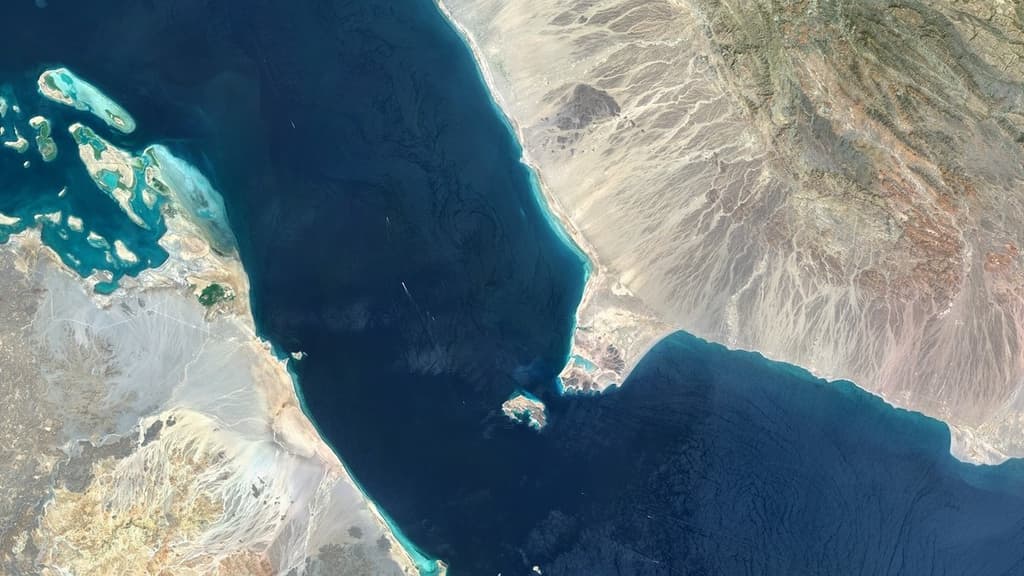
Recent Houthi military escalations near Yemen’s Mocha port and Bab el-Mandeb, including ground offensives and missile strikes on vessels, have kept war-risk premiums elevated and prompted carriers to maintain Cape of Good Hope reroutes for many sailings. AIS data through late August showed weekly transits fluctuating between roughly 223 and 302 vessels, well below pre-crisis norms near 500, with tanker and container segments most affected by selective targeting of Saudi-linked tonnage. Trader consensus reflected in the 46.7% implied probability for fewer than 25 daily transits versus 37.0% for 25–29 stems from uncertainty over whether attacks will intensify or ease before month-end, alongside potential shifts in insurance costs and operator routing policies that could swing volumes by 10–15 vessels per day.
Experimental AI-generated summary referencing Polymarket data. This is not trading advice and plays no role in how this market resolves. · UpdatedAvg. # of ships transiting Bab el-Mandeb Strait end of September?
Avg. # of ships transiting Bab el-Mandeb Strait end of September?
<25 46.7%
25-29 37%
30-34 8.8%
35-39 8%
$14,530 Vol.
$14,530 Vol.
<25
47%
25-29
37%
30-34
9%
35-39
8%
40+
2%
<25 46.7%
25-29 37%
30-34 8.8%
35-39 8%
$14,530 Vol.
$14,530 Vol.
<25
47%
25-29
37%
30-34
9%
35-39
8%
40+
2%
Transit calls include container, dry bulk, roll-on/roll-off, general cargo, and tanker ships. Ships not reported by IMF Portwatch will not be considered.
This market will resolve as soon as the relevant data has been published. If the relevant data is not published within 14 calendar days of the specified date, this market will resolve based on the most recent data published up to that point.
In case of obvious data integrity issues (i.e., erroneous data), the market may remain open until the end of the third calendar day (ET) after the date on which such data is first released to allow for corrections. Data integrity issues refer only to clerical or other similar errors in the underlying data, and do not include cases where IMF Portwatch differs from alternative sources.
The resolution source for this market will be IMF PortWatch, specifically the “Arrivals of Ships” data published for the Bab el-Mandeb Strait at https://portwatch.imf.org/pages/6b1814d64903461b98144a6cc25eb79c.
Market Opened: Aug 26, 2026, 6:14 PM ET
Resolution Source
IMF PortWatchResolver
0x69c47De9D...Transit calls include container, dry bulk, roll-on/roll-off, general cargo, and tanker ships. Ships not reported by IMF Portwatch will not be considered.
This market will resolve as soon as the relevant data has been published. If the relevant data is not published within 14 calendar days of the specified date, this market will resolve based on the most recent data published up to that point.
In case of obvious data integrity issues (i.e., erroneous data), the market may remain open until the end of the third calendar day (ET) after the date on which such data is first released to allow for corrections. Data integrity issues refer only to clerical or other similar errors in the underlying data, and do not include cases where IMF Portwatch differs from alternative sources.
The resolution source for this market will be IMF PortWatch, specifically the “Arrivals of Ships” data published for the Bab el-Mandeb Strait at https://portwatch.imf.org/pages/6b1814d64903461b98144a6cc25eb79c.
Resolution Source
IMF PortWatchResolver
0x69c47De9D...Recent Houthi military escalations near Yemen’s Mocha port and Bab el-Mandeb, including ground offensives and missile strikes on vessels, have kept war-risk premiums elevated and prompted carriers to maintain Cape of Good Hope reroutes for many sailings. AIS data through late August showed weekly transits fluctuating between roughly 223 and 302 vessels, well below pre-crisis norms near 500, with tanker and container segments most affected by selective targeting of Saudi-linked tonnage. Trader consensus reflected in the 46.7% implied probability for fewer than 25 daily transits versus 37.0% for 25–29 stems from uncertainty over whether attacks will intensify or ease before month-end, alongside potential shifts in insurance costs and operator routing policies that could swing volumes by 10–15 vessels per day.
Experimental AI-generated summary referencing Polymarket data. This is not trading advice and plays no role in how this market resolves. · Updated

Beware of external links.
Beware of external links.
Frequently Asked Questions