
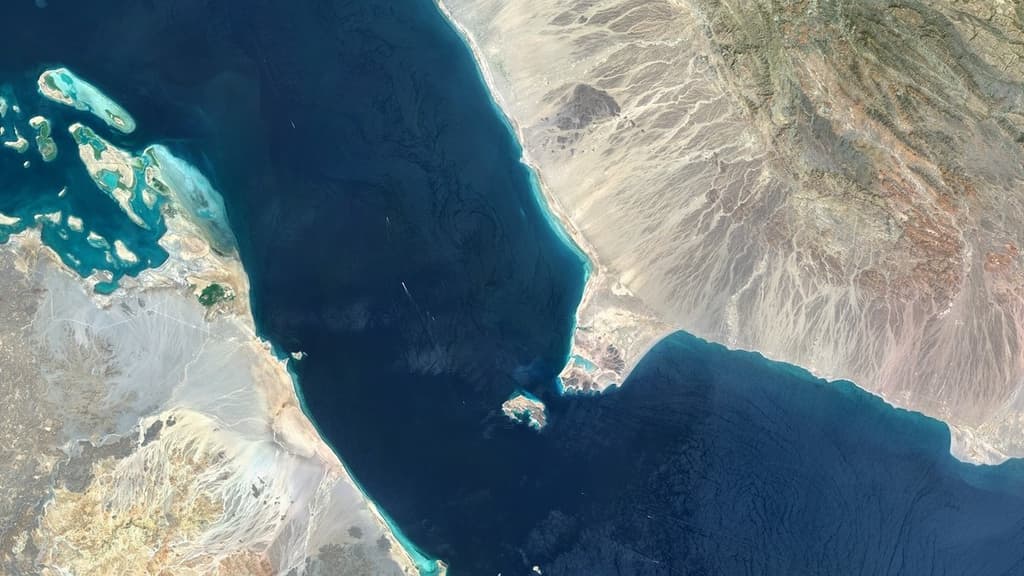
**Ongoing Houthi threats and carrier rerouting decisions remain the dominant drivers of Bab el-Mandeb transit volumes into the week of September 7, 2026, keeping weekly totals clustered in the 170–229 range.** Persistent war-risk premiums and selective targeting of Saudi-linked tonnage have sustained suppressed traffic well below the 2023 baseline of roughly 60–70 vessels per day, with recent AIS data showing weekly passings stabilizing near 250–300 but commodity and tanker flows notably thinner. Recent stabilization after July–August attacks has supported modest recovery in Suez-linked routing, yet elevated insurance costs and capacity constraints continue to favor selective or Cape diversions for many operators. With outcomes tightly bunched, swings will hinge on any fresh security incidents or shifts in liner schedules before resolution. Trader sentiment reflects real-capital pricing of these geopolitical and operational uncertainties rather than fixed forecasts.
Experimental AI-generated summary referencing Polymarket data. This is not trading advice and plays no role in how this market resolves. · UpdatedHow many ships transit Bab el-Mandeb Strait week of September 7?
How many ships transit Bab el-Mandeb Strait week of September 7?
170-189 36%
190-209 28%
210-229 24%
<170 8%
$36,512 Vol.
$36,512 Vol.
<170
8%
170-189
36%
190-209
28%
210-229
24%
230+
8%
170-189 36%
190-209 28%
210-229 24%
<170 8%
$36,512 Vol.
$36,512 Vol.
<170
8%
170-189
36%
190-209
28%
210-229
24%
230+
8%
Transit calls include container, dry bulk, roll-on/roll-off, general cargo, and tanker ships. Ships not reported by IMF Portwatch will not be considered.
This market will resolve as soon as all relevant data has been published. If the relevant data is not published within 14 calendar days of the specified date, this market will resolve based on the most recent data published up to that point.
In case of obvious data integrity issues (i.e., erroneous data), the market may remain open until the end of the third calendar day (ET) after the date on which such data is first released to allow for corrections. Data integrity issues refer only to clerical or other similar errors in the underlying data, and do not include cases where IMF Portwatch differs from alternative sources.
Only revisions to previously published data points made before all relevant data has been published will be considered.
The resolution source for this market will be IMF PortWatch, specifically the “Arrivals of Ships” data published for the Bab el-Mandeb Strait at https://portwatch.imf.org/pages/6b1814d64903461b98144a6cc25eb79c.
Market Opened: Sep 3, 2026, 10:26 AM ET
Resolver
0x69c47De9D...Transit calls include container, dry bulk, roll-on/roll-off, general cargo, and tanker ships. Ships not reported by IMF Portwatch will not be considered.
This market will resolve as soon as all relevant data has been published. If the relevant data is not published within 14 calendar days of the specified date, this market will resolve based on the most recent data published up to that point.
In case of obvious data integrity issues (i.e., erroneous data), the market may remain open until the end of the third calendar day (ET) after the date on which such data is first released to allow for corrections. Data integrity issues refer only to clerical or other similar errors in the underlying data, and do not include cases where IMF Portwatch differs from alternative sources.
Only revisions to previously published data points made before all relevant data has been published will be considered.
The resolution source for this market will be IMF PortWatch, specifically the “Arrivals of Ships” data published for the Bab el-Mandeb Strait at https://portwatch.imf.org/pages/6b1814d64903461b98144a6cc25eb79c.
Resolver
0x69c47De9D...**Ongoing Houthi threats and carrier rerouting decisions remain the dominant drivers of Bab el-Mandeb transit volumes into the week of September 7, 2026, keeping weekly totals clustered in the 170–229 range.** Persistent war-risk premiums and selective targeting of Saudi-linked tonnage have sustained suppressed traffic well below the 2023 baseline of roughly 60–70 vessels per day, with recent AIS data showing weekly passings stabilizing near 250–300 but commodity and tanker flows notably thinner. Recent stabilization after July–August attacks has supported modest recovery in Suez-linked routing, yet elevated insurance costs and capacity constraints continue to favor selective or Cape diversions for many operators. With outcomes tightly bunched, swings will hinge on any fresh security incidents or shifts in liner schedules before resolution. Trader sentiment reflects real-capital pricing of these geopolitical and operational uncertainties rather than fixed forecasts.
Experimental AI-generated summary referencing Polymarket data. This is not trading advice and plays no role in how this market resolves. · Updated


Beware of external links.
Beware of external links.
Frequently Asked Questions