
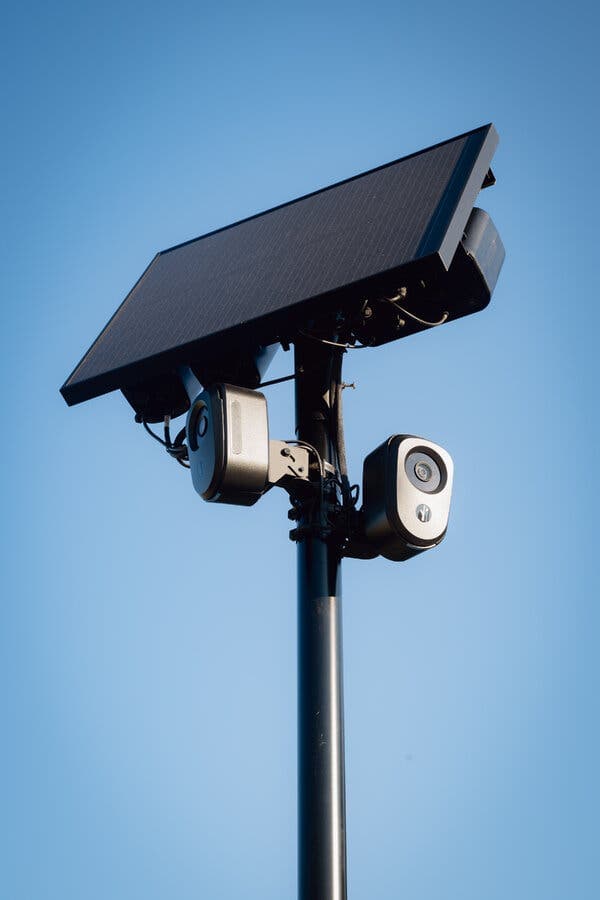
Recent executive directives from governors in Texas and Florida have paused state funding and ordered removal of Flock automated license plate readers from state roads, prompting widespread local agency suspensions and contract cancellations across multiple jurisdictions. These moves, driven by bipartisan concerns over data privacy, unauthorized sharing, and surveillance scope, align with existing or strengthened ALPR restrictions in states such as Colorado, Washington, and Maine. With dozens of municipal pauses already documented in 2026 and momentum building toward further legislative or administrative limits before year-end, traders view a state-level ban or pause as effectively assured. Reversal of current orders, narrow definitional disputes over what qualifies as a statewide action, or rapid policy shifts in response to new crime data represent the primary remaining variables.
Experimental AI-generated summary referencing Polymarket data. This is not trading advice and plays no role in how this market resolves. · Updated$5,529 Vol.
$5,529 Vol.
$5,529 Vol.
$5,529 Vol.
A qualifying restriction may be specific to Flock Safety or may apply to automated license plate reader cameras generally, so long as it covers cameras made by Flock Safety. A qualifying restriction need not be permanent; a temporary moratorium or pause will qualify.
Measures that impose conditions on use — including purpose limitations, data-retention limits, warrant requirements, audit requirements, or restrictions on data sharing — will not qualify. Only measures that prohibit, suspend, or pause the installation or operation of such cameras will qualify.
The restriction must come from a state. A restriction imposed by a city, county, or other political subdivision will not qualify. Qualifying restrictions must be imposed in accordance with the applicable state's constitutional and legal procedures, and may come via enacted legislation, executive order, court order applying statewide, or a binding directive issued by a state official or agency with statewide authority over the relevant police forces. Legislation that does not become law under the applicable state process, including vetoed bills that do not take effect, does not qualify.
A qualifying restriction imposed within the market timeframe will resolve this market "Yes" regardless of whether it is later lifted, repealed, enjoined, or overturned, and regardless of when it takes effect.
The primary resolution sources for this market will be official state legislative trackers, governor’s office announcements, secretary of state records, and other official information from the relevant state government; however, a consensus of credible reporting may also be used.
Market Opened: Aug 18, 2026, 3:46 PM ET
Resolver
0x65070BE91...Outcome proposed: Yes
No dispute
Final outcome: Yes
A qualifying restriction may be specific to Flock Safety or may apply to automated license plate reader cameras generally, so long as it covers cameras made by Flock Safety. A qualifying restriction need not be permanent; a temporary moratorium or pause will qualify.
Measures that impose conditions on use — including purpose limitations, data-retention limits, warrant requirements, audit requirements, or restrictions on data sharing — will not qualify. Only measures that prohibit, suspend, or pause the installation or operation of such cameras will qualify.
The restriction must come from a state. A restriction imposed by a city, county, or other political subdivision will not qualify. Qualifying restrictions must be imposed in accordance with the applicable state's constitutional and legal procedures, and may come via enacted legislation, executive order, court order applying statewide, or a binding directive issued by a state official or agency with statewide authority over the relevant police forces. Legislation that does not become law under the applicable state process, including vetoed bills that do not take effect, does not qualify.
A qualifying restriction imposed within the market timeframe will resolve this market "Yes" regardless of whether it is later lifted, repealed, enjoined, or overturned, and regardless of when it takes effect.
The primary resolution sources for this market will be official state legislative trackers, governor’s office announcements, secretary of state records, and other official information from the relevant state government; however, a consensus of credible reporting may also be used.
Resolver
0x65070BE91...Outcome proposed: Yes
No dispute
Final outcome: Yes
Recent executive directives from governors in Texas and Florida have paused state funding and ordered removal of Flock automated license plate readers from state roads, prompting widespread local agency suspensions and contract cancellations across multiple jurisdictions. These moves, driven by bipartisan concerns over data privacy, unauthorized sharing, and surveillance scope, align with existing or strengthened ALPR restrictions in states such as Colorado, Washington, and Maine. With dozens of municipal pauses already documented in 2026 and momentum building toward further legislative or administrative limits before year-end, traders view a state-level ban or pause as effectively assured. Reversal of current orders, narrow definitional disputes over what qualifies as a statewide action, or rapid policy shifts in response to new crime data represent the primary remaining variables.
Experimental AI-generated summary referencing Polymarket data. This is not trading advice and plays no role in how this market resolves. · Updated

Beware of external links.
Beware of external links.
Frequently Asked Questions