
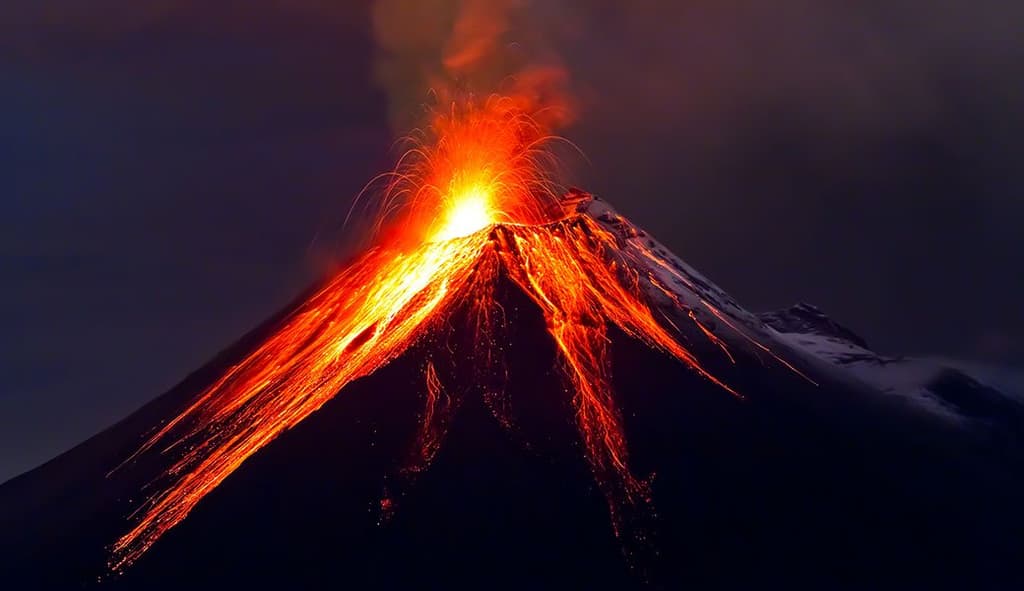
**Recent official monitoring data and the inherent rarity of VEI ≥4 events continue to anchor trader sentiment toward zero large eruptions in 2026.** Global Volcanism Program records through March 2026 list no new VEI 4+ events, with ongoing activity at sites like Semeru and Manam remaining at lower indices. The early-September Anak Krakatau eruption produced a 15 km plume and flight disruptions, meeting the height threshold for VEI 4 classification, yet final volume and duration assessments from agencies such as PVMBG and the Smithsonian will determine its rating. Submarine activity at sites like Titan Ridge earlier in the year also awaits confirmation. With only about three months remaining and typical annual rates below one confirmed VEI 4+ event, market-implied odds reflect both the low baseline frequency and the absence of sustained explosive indicators capable of shifting consensus before year-end.
Experimental AI-generated summary referencing Polymarket data. This is not trading advice and plays no role in how this market resolves. · UpdatedHow many large volcano eruptions (VEI ≥4) in 2026?
How many large volcano eruptions (VEI ≥4) in 2026?
0 80%
1 24%
2 2.3%
3 1.2%
$1,160,119 Vol.
$1,160,119 Vol.
0
80%
1
24%
2
2%
3
1%
4
1%
5+
1%
0 80%
1 24%
2 2.3%
3 1.2%
$1,160,119 Vol.
$1,160,119 Vol.
0
80%
1
24%
2
2%
3
1%
4
1%
5+
1%
The primary resolution source will be the Smithsonian Institution Global Volcanism Program (GVP: https://volcano.si.edu/), specifically the cumulative figures for 2026 for VEI 4, VEI 5, and VEI 6 released on the page currently titled "Eruptions Avg 2000-2024 (N/T)" (https://volcano.si.edu/faq/index.cfm?question=eruptionsbyyear) as of March 31, 2027, 12 PM ET. Any prior updates will not be considered finalized.
If this dataset has not been updated to include all relevant events by March 31, 2027, or if the Smithsonian GVP becomes permanently unavailable, this market may resolve based on a consensus of credible scientific sources, including the U.S. Geological Survey (USGS), national or regional volcanic observatories, or credible reporting of a scientific consensus.
Note: Smithsonian Institution Global Volcanism Program databases, which include eruptions that reached the relevant threshold prior to this market’s timeframe (e.g., https://volcano.si.edu/faq/index.cfm?question=eruptionsbyyear&checkyear=2025), will not be considered.
Market Opened: Jan 2, 2026, 1:48 PM ET
Resolver
0x2F5e3684c...The primary resolution source will be the Smithsonian Institution Global Volcanism Program (GVP: https://volcano.si.edu/), specifically the cumulative figures for 2026 for VEI 4, VEI 5, and VEI 6 released on the page currently titled "Eruptions Avg 2000-2024 (N/T)" (https://volcano.si.edu/faq/index.cfm?question=eruptionsbyyear) as of March 31, 2027, 12 PM ET. Any prior updates will not be considered finalized.
If this dataset has not been updated to include all relevant events by March 31, 2027, or if the Smithsonian GVP becomes permanently unavailable, this market may resolve based on a consensus of credible scientific sources, including the U.S. Geological Survey (USGS), national or regional volcanic observatories, or credible reporting of a scientific consensus.
Note: Smithsonian Institution Global Volcanism Program databases, which include eruptions that reached the relevant threshold prior to this market’s timeframe (e.g., https://volcano.si.edu/faq/index.cfm?question=eruptionsbyyear&checkyear=2025), will not be considered.
Resolver
0x2F5e3684c...**Recent official monitoring data and the inherent rarity of VEI ≥4 events continue to anchor trader sentiment toward zero large eruptions in 2026.** Global Volcanism Program records through March 2026 list no new VEI 4+ events, with ongoing activity at sites like Semeru and Manam remaining at lower indices. The early-September Anak Krakatau eruption produced a 15 km plume and flight disruptions, meeting the height threshold for VEI 4 classification, yet final volume and duration assessments from agencies such as PVMBG and the Smithsonian will determine its rating. Submarine activity at sites like Titan Ridge earlier in the year also awaits confirmation. With only about three months remaining and typical annual rates below one confirmed VEI 4+ event, market-implied odds reflect both the low baseline frequency and the absence of sustained explosive indicators capable of shifting consensus before year-end.
Experimental AI-generated summary referencing Polymarket data. This is not trading advice and plays no role in how this market resolves. · Updated

Beware of external links.
Beware of external links.
Frequently Asked Questions